

Duel 50mm solid axles are huge over kill, each 50mm axle is rated at 2000Kg.
I wouldnt be loading the frame to more than that and of course as soon as you go above 2000Kg rating you need breakaway brakes which almost doubles the cost.
Huntsman have a 2000Kg tandem system with 45mm axles with 2 choices if springs the standard leaf springs setup for load sharing and rocker / roller springs. Im not sure what the difference is.
TSP forum has some trailer gurus I will put a post and ask if they know the difference.
My thought is that if I go tandem axles the extra weight of the extra wheels, springs axles etc takes away from the weight carrying ability of the trailer even though all these parts aren't actually supported weight, all the authorities seem to care about is the GVM which is the total weight of the trailer and load, so if these parts weight 60Kg thats 60Kg less load I can carry on the trailer
Features of the ideal Custom Trailer
-
sailboatmike

- Admiral
- Posts: 1597
- Joined: Thu Mar 12, 2015 10:17 pm
- Sailboat: MacGregor 26X
- Location: Australia
-
Neo

- Admiral
- Posts: 1093
- Joined: Fri Jan 30, 2015 4:29 pm
- Sailboat: MacGregor 26M
- Location: Central Coast, NSW, Australia
Re: Features of the ideal Custom Trailer
Yes I understand where you're coming from but to make the authorities completely happy you need to spend $11, 000!
I have rego now so I'd rather focus on true safety (strong frame, axle(s) brakes and wheels) then worry about the day I am asked to weigh my rig.
I have rego now so I'd rather focus on true safety (strong frame, axle(s) brakes and wheels) then worry about the day I am asked to weigh my rig.
-
sailboatmike
- Admiral
- Posts: 1597
- Joined: Thu Mar 12, 2015 10:17 pm
- Sailboat: MacGregor 26X
- Location: Australia
Re: Features of the ideal Custom Trailer
Dont bring it to any of the Victorian sailing spots then, the RTA (Road Traffic Authority) are known to sit and wait for TS's near the Gippsland lakes to pull over cars with TS's and check weight and trailer compliance.Neo wrote:Yes I understand where you're coming from but to make the authorities completely happy you need to spend $11, 000!
I have rego now so I'd rather focus on true safety (strong frame, axle(s) brakes and wheels) then worry about the day I am asked to weigh my rig.
They know there will be 100's of boats passing through so its easy pickings for them
-
Neo
- Admiral
- Posts: 1093
- Joined: Fri Jan 30, 2015 4:29 pm
- Sailboat: MacGregor 26M
- Location: Central Coast, NSW, Australia
Re: Features of the ideal Custom Trailer
Thanks for the tip 
Just curious... Whats the fine for over an weight Trailer?
Just curious... Whats the fine for over an weight Trailer?
-
Neo
- Admiral
- Posts: 1093
- Joined: Fri Jan 30, 2015 4:29 pm
- Sailboat: MacGregor 26M
- Location: Central Coast, NSW, Australia
Re: Features of the ideal Custom Trailer
No disrespect intended to the Australian owner of this trailer but I just had to share this.
I contacted the Trailer Company pictured and asked for a quote. They've given me a build price of $11,025 for a Four wheel trailer that has only 2,000Kg (4,409pds) G.V.M..... So not only is this trailer VERY expensive it's also still illegal!!
On the flip side ... if it looks "the part" would the authorities bother stopping it?
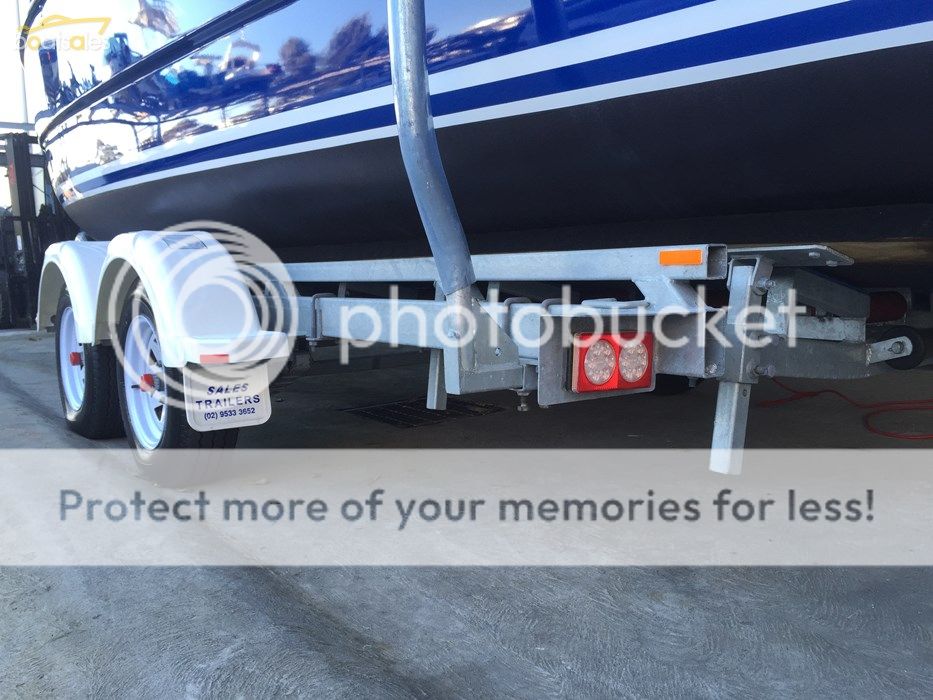
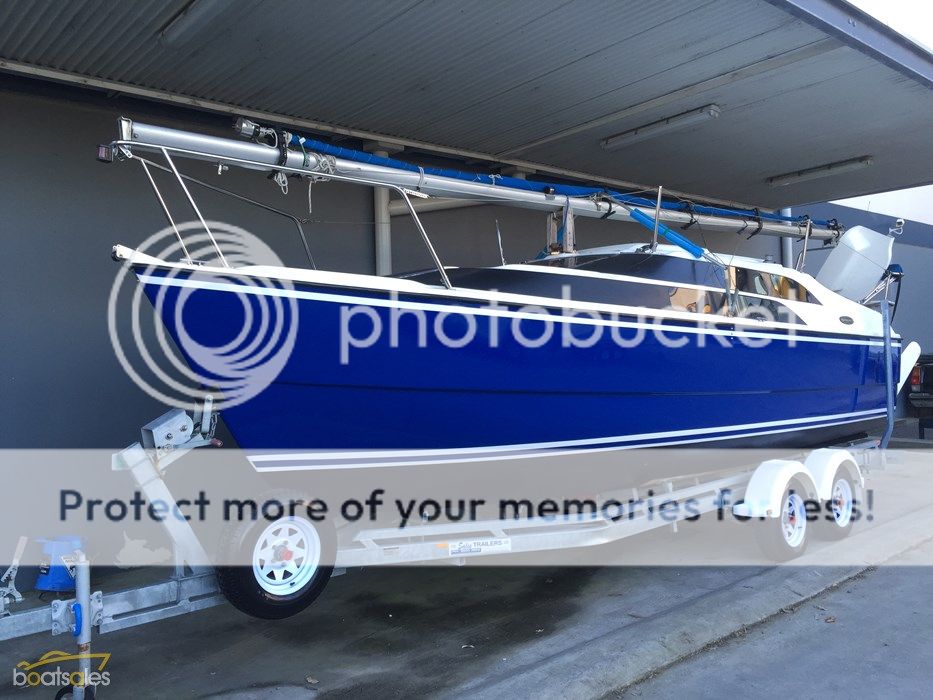
I contacted the Trailer Company pictured and asked for a quote. They've given me a build price of $11,025 for a Four wheel trailer that has only 2,000Kg (4,409pds) G.V.M..... So not only is this trailer VERY expensive it's also still illegal!!
On the flip side ... if it looks "the part" would the authorities bother stopping it?
-
Tomfoolery

- Admiral
- Posts: 6135
- Joined: Tue Jul 05, 2011 7:42 am
- Sailboat: MacGregor 26X
- Location: Rochester, NY '99X BF50 'Tomfoolery'
Re: Features of the ideal Custom Trailer
Looking at the Huntsman site, they look like roller versions of a conventional slipper spring arrangement, which is also equalized, but usually used only on heavier trailers (like flatbed tag-alongs for small heavy equipment). Probably more money than 'conventional' equalized leaf, though. And I don't see the advantage over conventional equalized leaf, since that's what they are anyway, but using rollers/slippers instead of shackles to accommodate length changes in the springs.sailboatmike wrote:Huntsman have a 2000Kg tandem system with 45mm axles with 2 choices if springs the standard leaf springs setup for load sharing and rocker / roller springs. Im not sure what the difference is.
TSP forum has some trailer gurus I will put a post and ask if they know the difference.
My trailer has the original (marginal at best) 3500 lb axle, and the PO moved it forward and added a second one, keeping the midpoint between them at the same location as the original axle center. The weird thing about the original springs under my
 trailer is that the leaves are 0.430" thick, which is very thick as these short little springs go. They have a spring rate of around 2500 lb/in, while the average 4-leaf 1750 lb (each) spring stack is only 0.323" thick, for a spring rate around half that of the originals, meaning they're much softer. I don't know why they made the original springs like that, other than they knew they'd be overloaded and wanted to avoid bottoming the suspension on bad bumps.
My suspension had a combined capacity of at least 7000 lb, so I stripped out the leaf springs to soften them up. It rides nice and smooth now, as evidenced by the lack of shock felt throughout the tow vehicle as the trailer goes over normal road bumps and irregularities. It still tows nice and stable, but it's not banging around back there any more.
And as an aside, tandem axles with equalized springs result in halving the effective spring rate of each leaf, since hitting a bump raises the axle by the height of the bump (not counting tire deflection, of course), but both springs 'see' the increase in load, and deflect only about half as much as the same spring on a single axle. It's functionally the same as putting two springs in series - for a given deflection, each spring only moves half as much, so the increase in force is half that of a single spring. So even with full capacity springs (7000 lb worth for all four springs), the ride will be softer than for a single axle with 3500 lb springs. Softening the springs or using lighter springs still gives the necessary capacity for a 4500 lb [2045 kg] load, and makes for a super soft ride, with the added benefit of loading the bearings and tire far below their rated capacity.
Just something interesting. To me, at least.

-
sailboatmike
- Admiral
- Posts: 1597
- Joined: Thu Mar 12, 2015 10:17 pm
- Sailboat: MacGregor 26X
- Location: Australia
Re: Features of the ideal Custom Trailer
The fine would be around $300 BUT then unless you can lighten the load you will have to get a flatbed in to move your boat and trailer as it cant be towed on the road.
I was looking at one trailer company yesterday and their standard trailer that a Mac would fit on is 750Kg and rated at 3500Kg with a price tag of $9500,
I think I would build my own or get one built to my spec as most trailer mobs only know about building power boat trailers.
For a M or X a 2000Kg trailer would be plenty depending on how much junk you load into the boat and of course the actual trailer weight. if you have a 500Kg trailer then you can only carry 1500Kg of weight on it.
This is why Im big on single axle so your not pulling an extra axle, 2 extra wheels and 2 extra springs, so a saving of around 60 to 100Kg
I
I was looking at one trailer company yesterday and their standard trailer that a Mac would fit on is 750Kg and rated at 3500Kg with a price tag of $9500,
I think I would build my own or get one built to my spec as most trailer mobs only know about building power boat trailers.
For a M or X a 2000Kg trailer would be plenty depending on how much junk you load into the boat and of course the actual trailer weight. if you have a 500Kg trailer then you can only carry 1500Kg of weight on it.
This is why Im big on single axle so your not pulling an extra axle, 2 extra wheels and 2 extra springs, so a saving of around 60 to 100Kg
I
-
Neo
- Admiral
- Posts: 1093
- Joined: Fri Jan 30, 2015 4:29 pm
- Sailboat: MacGregor 26M
- Location: Central Coast, NSW, Australia
Re: Features of the ideal Custom Trailer
This interest me too Tom ... In fact I'm kinda losing sleep over itTomfoolery wrote: The weird thing about the original springs under my
Just something interesting. To me, at least.

I'd noticed how thick those leaves are too ... and I like your idea of removing one of them.... Was that hard to do?... did you have to take the whole spring off of the trailer?.... BTW, the bolts holding the leaves to the frame, do they corrode away?
With Australian trailer regulations in force I seem to be "Caught between the devil and the deep blue sea" !
The whole rig is currently overweight for it's class (TBC) and if I improve the load bearing capacity (in any way) I'll even more overweight.

If I upgrade to a higher class (by modification or a new trailer) the towing capacity of my car may be too low for the weight of the rig. So my trailer expenses would need to be followed by the purchase of a new towing vehicle

Hmmm .... May as well make a new trailer out of carbon fiber and titanium and be done with
All the best.
Neo
-
Neo
- Admiral
- Posts: 1093
- Joined: Fri Jan 30, 2015 4:29 pm
- Sailboat: MacGregor 26M
- Location: Central Coast, NSW, Australia
Re: Features of the ideal Custom Trailer
Not so bad but I guess that comes with 3 point on the licence too ?sailboatmike wrote:The fine would be around $300 BUT then unless you can lighten the load you will have to get a flatbed in to move your boat and trailer as it cant be towed on the road.
I'm staring to see it your way Mike .... And I can see this is going to effect my willingness to travel long distances and also effect the re-sale value of my Mac
So I really need to solve this situation SOMEHOW! .... No Panic "Everything comes to he who waits"
All the best.
Neo
-
sailboatmike
- Admiral
- Posts: 1597
- Joined: Thu Mar 12, 2015 10:17 pm
- Sailboat: MacGregor 26X
- Location: Australia
Re: Features of the ideal Custom Trailer
Exactly my problem with the travel, mind you my Mac came back from Canberra at 110Kph without any issues with only a quick loo stop.
My boat live 30 meters from the ramp, mast up so day to day the trailer isnt an issue, I would however like to spread my sailing wings some and try some different locals such as the gippsland lakes and Port Phillip bay, My local sailing place is renown for being difficult st the best of times with 12 foot tides and strong winds and currents prevailing, 12 foot tides are OK but when the majority of the water is only 10 feet deep it becomes problematic at low tide
Docking is the next issue as the tide runs at 90 degrees to the boat ramp, because of the tides we normally come back in on a rising tide pushing us at around 4kts with the afternoon 10 to 15 knt of sea breeze behind it. There is no option to use the other side of the Jetty there is only about 25 feet between the nasty concrete pier and the floating jetty, with the wind and tide pushing me toward the concrete pier it would take about 5 seconds to cover that distance sideways
Lets just say its interesting trying to get onto the floating jetty given the conditions it calls for all fenders out before we get close then add to this the fishos who in their inagination think their 15 foot 1/2 cabin is a large boat and wont give us space to dock, they get a hull of a shock when we eventually get in and dwarf their 1/2 cabin, then they ask us to move because they cant get around us because we have had to come in so far forward on the jetty they cant retrieve, all this despite the point they are asked to move up so we can get right at the back so they dont have to go around us and importantly they can get their trailer in far enough to get their boat out.
It really is fun and games
My boat live 30 meters from the ramp, mast up so day to day the trailer isnt an issue, I would however like to spread my sailing wings some and try some different locals such as the gippsland lakes and Port Phillip bay, My local sailing place is renown for being difficult st the best of times with 12 foot tides and strong winds and currents prevailing, 12 foot tides are OK but when the majority of the water is only 10 feet deep it becomes problematic at low tide
Docking is the next issue as the tide runs at 90 degrees to the boat ramp, because of the tides we normally come back in on a rising tide pushing us at around 4kts with the afternoon 10 to 15 knt of sea breeze behind it. There is no option to use the other side of the Jetty there is only about 25 feet between the nasty concrete pier and the floating jetty, with the wind and tide pushing me toward the concrete pier it would take about 5 seconds to cover that distance sideways
Lets just say its interesting trying to get onto the floating jetty given the conditions it calls for all fenders out before we get close then add to this the fishos who in their inagination think their 15 foot 1/2 cabin is a large boat and wont give us space to dock, they get a hull of a shock when we eventually get in and dwarf their 1/2 cabin, then they ask us to move because they cant get around us because we have had to come in so far forward on the jetty they cant retrieve, all this despite the point they are asked to move up so we can get right at the back so they dont have to go around us and importantly they can get their trailer in far enough to get their boat out.
It really is fun and games
-
Neo
- Admiral
- Posts: 1093
- Joined: Fri Jan 30, 2015 4:29 pm
- Sailboat: MacGregor 26M
- Location: Central Coast, NSW, Australia
Re: Features of the ideal Custom Trailer
The fishos ... OMG! ... I think I need to take a gun to the boat ramp
I can't complain really. A 15ft tinnie saved the day and towed me 300m once, when my OB died .... Against a heavy wind with smoke bellowing out his OB I don't think he'll do that again
I can't complain really. A 15ft tinnie saved the day and towed me 300m once, when my OB died .... Against a heavy wind with smoke bellowing out his OB I don't think he'll do that again
-
Tomfoolery
- Admiral
- Posts: 6135
- Joined: Tue Jul 05, 2011 7:42 am
- Sailboat: MacGregor 26X
- Location: Rochester, NY '99X BF50 'Tomfoolery'
Re: Features of the ideal Custom Trailer
Here are a few pics I took while doing the work. They were both (new axle and original) 4-leaf stacks, so for the thinner 1750 lb (each - rated load) stack, I removed the second shortest, and cut the second longest to terminate midway between the short and the long, the way a 3-leaf stack would be made. The heavier original springs also had 4 leaves, so I removed the shortest and the second longest. If memory serves.Neo wrote:This interest me too Tom ... In fact I'm kinda losing sleep over itTomfoolery wrote: The weird thing about the original springs under my
Just something interesting. To me, at least.
I'd noticed how thick those leaves are too ... and I like your idea of removing one of them.... Was that hard to do?... did you have to take the whole spring off of the trailer?.... BTW, the bolts holding the leaves to the frame, do they corrode away?


You can see the difference in thickness between the originals and the newer axle, which has a common spring configuration and leaf thickness. Those originals may be either obsolete, or customs, though I find it hard to believe MacGregor would pay for customs when more leaves of 'standard' thickness(es) would be easier.

As to the shackle bolts, they seemed to be fine, with little wear, though they may have been changed at some point. I cut the original U-bolts off with an angle grinder, as there was no way those nuts were coming off. The old stacks had a rivet in the center (head fits into a recess in the pad on the axle), while the newer stacks had a bolt and nut arrangement so that was easy to replicate with a shorter bolt (maybe), and I used a bolt on the old stacks, too. If memory serves, at least.
Rides nice and soft now. I used to be able to feel the bumps in the tow vehicle (would have been a lot worse with just the original axle), but don't really feel them now (same roads, same elevated storm drain grates). And as I said, putting a second axle on with equalized suspension is tantamount to cutting the spring rate in half as far as one wheel hitting a bump (then the other, of course), while not diminishing the ability of the suspension to carry the load. And it halves the load on each axle, so the bearings and tires see much less load. And load is what wears bearings out fast (not speed, within reason). And four tires resist side load (sway) twice as much as just two tires.
It may be a cheap ol' steel trailer, but it tows just fine, and I see no need to replace it. Though in fairness to those sailors in the Land Down Unda', it may not hold up to what some of them have to deal with as far as roads (or lack thereof), but that's a whole 'nuther thing, of course.
-
Neo
- Admiral
- Posts: 1093
- Joined: Fri Jan 30, 2015 4:29 pm
- Sailboat: MacGregor 26M
- Location: Central Coast, NSW, Australia
Re: Features of the ideal Custom Trailer
Thanks Tom,
It's interesting comparing your Mac original to mine.
My single axle spring have 7 leaves .... Your 4 springs now have 3 springs. What would you guess is the rating of each spring now?
It looks like your forward hanger is right on the bend of the main C-Channel... Is that correct?
I can see the original square bar axle (is that 45mm x 45mm?) with drop axle stubs, by only half a stub (22mm).
When I got my trailer it had a drop stub and a stub spacer too. So 90mm of drop! My axle had (and still has) a flat bar welded along the top but that didn't support the stubs enough and both wheels a had a frightening level of negative camber I'm told that each drop reduces an axles load bearing capacity by 200Kgs. So as mine was 400Kgs down So I'm guessing a previous owner went to a lot of trouble (and risk) to keep his car tires dry at the ramp
Hi Mike, do you know if tandem axles have to have tandem brakes too? .... If not, do brakes have to be on the back axle?
All the best.
Neo
It's interesting comparing your Mac original to mine.
My single axle spring have 7 leaves .... Your 4 springs now have 3 springs. What would you guess is the rating of each spring now?
It looks like your forward hanger is right on the bend of the main C-Channel... Is that correct?
I can see the original square bar axle (is that 45mm x 45mm?) with drop axle stubs, by only half a stub (22mm).
When I got my trailer it had a drop stub and a stub spacer too. So 90mm of drop! My axle had (and still has) a flat bar welded along the top but that didn't support the stubs enough and both wheels a had a frightening level of negative camber
I'm told that each drop reduces an axles load bearing capacity by 200Kgs. So as mine was 400Kgs down So I'm guessing a previous owner went to a lot of trouble (and risk) to keep his car tires dry at the ramp Hi Mike, do you know if tandem axles have to have tandem brakes too? .... If not, do brakes have to be on the back axle?
All the best.
Neo
-
Tomfoolery
- Admiral
- Posts: 6135
- Joined: Tue Jul 05, 2011 7:42 am
- Sailboat: MacGregor 26X
- Location: Rochester, NY '99X BF50 'Tomfoolery'
Re: Features of the ideal Custom Trailer
It's at the bend because it was moved forward to make room for the second axle and to keep the center point of the group at the original location of the single. Tongue weight is about 400 lb [182 kg] depending on how I load it for travel.
In the US, braking requirements vary by state. Most require brakes at 2000 lb [909 kg] but that's not universal. And some states require brakes on all axles (Maryland I believe is one) while others only on one, and/or fuzzy words about adequate to stop safely or something.
I don't recall any state requirement regarding which axle when only one has brakes, but I put mine on the rear axle because with equalized leaf springs the rear will increase load while the front will decrease due to the equalizer between them.
In the US, braking requirements vary by state. Most require brakes at 2000 lb [909 kg] but that's not universal. And some states require brakes on all axles (Maryland I believe is one) while others only on one, and/or fuzzy words about adequate to stop safely or something.
I don't recall any state requirement regarding which axle when only one has brakes, but I put mine on the rear axle because with equalized leaf springs the rear will increase load while the front will decrease due to the equalizer between them.
-
Neo
- Admiral
- Posts: 1093
- Joined: Fri Jan 30, 2015 4:29 pm
- Sailboat: MacGregor 26M
- Location: Central Coast, NSW, Australia
Re: Features of the ideal Custom Trailer
That's good information... thanks for that.Tomfoolery wrote:I put mine on the rear axle because with equalized leaf springs the rear will increase load while the front will decrease due to the equalizer between them.
In Oz equalized springs are are sold only in sets. Some 7 leaf ones have 1600Kgs rating and other 5 leaf ones have 2000Kgs rating.
 ... I'm trying to work out what would be the best ones to go for (if I go for Tandem). Based on your experience what rating would you go for?
All the best.
Neo