Modification to Preemptively Add Bilge Pumps to a MAC26X
Posted: Sat Mar 27, 2021 2:46 am
Hi All!
It was suggested we share our experiences in PREEMPTIVELY adding Bilge pumps to our Mac26X as part of the preparations of Over Easy and ourselves in anticipation of exploring the Atlantic Intra-Coastal Waterway in 2022.
Background:
First we would like to state that Over Easy is and has been a dry boat and we nor the great POs have never had any issues with water intrusion.
We are choosing to PREEMPTIVELY add a bilge pump system to our vessel.
It’s funny that thing some people have about bilge pumps. Our philosophy is to follow the mottos of “Be Prepared” and “Plan for the Worst - Hope for the Best”.
There is no evidence of Over Easy ever having any water damage or intrusion (other than very minor chain plate, screw hole or window seam leaks which are to be expected. The primary purpose of any good system design for people is to mitigate for the adverse potential condition. Like seat belts and airbags in cars. Many people can and do spend an entire lifetime driving without ever having had to really use either a seatbelt or an airbag in a substantial collision. But, that said, IF and WHEN one were to be in a substantial collision one would be very grateful that both were preemptively installed, fully operational and utilized. (I can attest to that having spent many years as a Medic for a midsized city.)
Having an adequate bilge pump system is a similar preemptive action we decided to invest in. Right now with 3 pumps we are actually at a minimum of the current guidelines for a 26 foot vessel. With the next 2 pumps we should be well within that design guidance.
In design and practice one should not use a bilge pump to address a persistent problem or issues with chronic measurable water intrusions. If anyone “needs” a pump to deal with a consistent problem they actually “need to solve” the water intrusion. (Note: Even just one of our bilge pumps is more capable than any person with a bucket. Never mind the aspects of finding/plugging the leak and getting to a safe place.)
In the event we ever do have an incident where we incur a substantial collision with something that results in water ingress the bilge pumps help us automatically “buy time” to deal with the problem instead of just relying on the built-in flotation, (Which is a GREAT thing that Macgregor did!) or possibly having to rely on our life jackets all of which will depend upon whatever MIGHT POSSIBLY occur.
Even a small bilge pump can automatically remove much more water than we ever could by hand in the same time frame. It does it’s function so that the cause/source of the water intrusion can be identified and addressed. Bilge pumps allow for the crew to manage vessel, keep it under control and navigate it to a safer location instead f attempting to manually bail.
We are planning on many extended trips in Over Easy on many different waterways and conditions. Having bilge pumps gives us options and peace of mind (within reason) that we have preemptively bought time to hopefully address an issue before it becomes an incident.
It works for us. -
-
What We Chose To Accomplish:
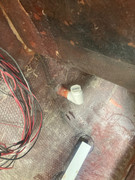
We opt’d to start with 3 automatic/manual bilge pumps.
#1 is on Port, #2 is Center & #3 is Starboard amidships.
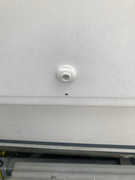
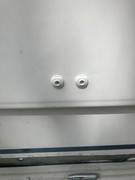
The Discharge is also amidships above the chines on both sides.
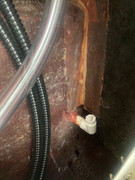
This was done to have Minimal discharge runs with smooth surface marine grade bilge hose reducing pump head losses and line run length losses. The discharge ports are over 18 inches above the actual loaded waterline of our vessel.
No check valves per current manufacturer recommendations nor do we have “high loops”. Instead we placed the discharges above the chines as high as we could within the space available. All discharge lines are as short as we could make them, all have constant rise without any reversals to avoid any potential for air locks to form.
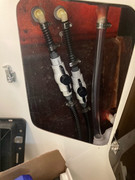
Now with that said we decided to take into account the EXCELLENT advice from several more experienced forum contributors with regard to potential heeling issues we decide to add easily accessed 1/4 turn discharge isolation valves.
We’re not planning on sailing that aggressively but thought it better to put them in now than wish we had later! Again, these valves are all easily and readily accessed.
Also added a separate high bilge water alarm in the center section as a back stop failsafe.
We plan in adding an additional two bilge pumps in the aft berth port & starboard at a later date as there is the potential for water to collect there and not reach the midship areas directly.
We chose to use marine grade bilge wire for all pumps and switch. This wire is designed for use in wet locations and aggressive marine environments.
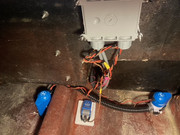
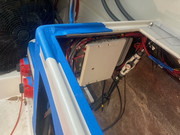
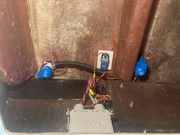
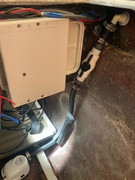
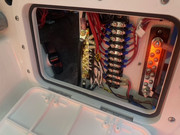
For the high water switch, starboard & center pumps as well we chose to have a high mounted plastic junction box with a protected terminal strip under the aft dinette bench. That way the terminals are well above the bilges and if any replacements are needed in the future it should be relatively easy to access.
The Port pump wire route to the new junction box fabricated into the aft galley wall.
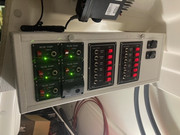
We went with 5 bilge control switch sub panels from SeaDog as they have separate indicated Automatic and Manual selections. The SeaDog Manual selection also stays ON when selected whereas other brands only have a Monetary-ON option. We kind of like that so that if we had to (if the automatic aspect failed for some reason or other) we can turn on a particular pump and it stays on while we deal with other mitigations (such as finding where to water is coming from! ).
).
We also added a SeaDog High Water Alarm subpanel Incas all else fails. ( Like we forgot to turn on the automatic bilge pumps and/or the batteries run low.) The sub panel will work quite loudly with even as little as 5 Volts!
On the two pre-existing thru-hulls.... We decided to remove and cap the galley and head sink drains in such a manner that they are sealed but we still retain them.
As designed they came from the factory as glassed in 3/4 inch diameter PVC pipe. We used PVC glued fittings and properly sealed threads. We feel this is much more secure than the smooth pipe and vinyl tube band clamps originally as we found had been done as originally installed.
We chose not to permanently plug them nor did we choose to physically remove them.
To address the increased wiring, electrical power requirements and electrical control systems we also chose to concurrently modified our vessel’s related systems. We will present that as a separate article.
Here are some pictures:
It was suggested we share our experiences in PREEMPTIVELY adding Bilge pumps to our Mac26X as part of the preparations of Over Easy and ourselves in anticipation of exploring the Atlantic Intra-Coastal Waterway in 2022.
Background:
First we would like to state that Over Easy is and has been a dry boat and we nor the great POs have never had any issues with water intrusion.
We are choosing to PREEMPTIVELY add a bilge pump system to our vessel.
It’s funny that thing some people have about bilge pumps. Our philosophy is to follow the mottos of “Be Prepared” and “Plan for the Worst - Hope for the Best”.
There is no evidence of Over Easy ever having any water damage or intrusion (other than very minor chain plate, screw hole or window seam leaks which are to be expected. The primary purpose of any good system design for people is to mitigate for the adverse potential condition. Like seat belts and airbags in cars. Many people can and do spend an entire lifetime driving without ever having had to really use either a seatbelt or an airbag in a substantial collision. But, that said, IF and WHEN one were to be in a substantial collision one would be very grateful that both were preemptively installed, fully operational and utilized. (I can attest to that having spent many years as a Medic for a midsized city.)
Having an adequate bilge pump system is a similar preemptive action we decided to invest in. Right now with 3 pumps we are actually at a minimum of the current guidelines for a 26 foot vessel. With the next 2 pumps we should be well within that design guidance.
In design and practice one should not use a bilge pump to address a persistent problem or issues with chronic measurable water intrusions. If anyone “needs” a pump to deal with a consistent problem they actually “need to solve” the water intrusion. (Note: Even just one of our bilge pumps is more capable than any person with a bucket. Never mind the aspects of finding/plugging the leak and getting to a safe place.)
In the event we ever do have an incident where we incur a substantial collision with something that results in water ingress the bilge pumps help us automatically “buy time” to deal with the problem instead of just relying on the built-in flotation, (Which is a GREAT thing that Macgregor did!) or possibly having to rely on our life jackets all of which will depend upon whatever MIGHT POSSIBLY occur.
Even a small bilge pump can automatically remove much more water than we ever could by hand in the same time frame. It does it’s function so that the cause/source of the water intrusion can be identified and addressed. Bilge pumps allow for the crew to manage vessel, keep it under control and navigate it to a safer location instead f attempting to manually bail.
We are planning on many extended trips in Over Easy on many different waterways and conditions. Having bilge pumps gives us options and peace of mind (within reason) that we have preemptively bought time to hopefully address an issue before it becomes an incident.
It works for us.
 -
-What We Chose To Accomplish:
We opt’d to start with 3 automatic/manual bilge pumps.
#1 is on Port, #2 is Center & #3 is Starboard amidships.
The Discharge is also amidships above the chines on both sides.
This was done to have Minimal discharge runs with smooth surface marine grade bilge hose reducing pump head losses and line run length losses. The discharge ports are over 18 inches above the actual loaded waterline of our vessel.
No check valves per current manufacturer recommendations nor do we have “high loops”. Instead we placed the discharges above the chines as high as we could within the space available. All discharge lines are as short as we could make them, all have constant rise without any reversals to avoid any potential for air locks to form.
Now with that said we decided to take into account the EXCELLENT advice from several more experienced forum contributors with regard to potential heeling issues we decide to add easily accessed 1/4 turn discharge isolation valves.
We’re not planning on sailing that aggressively but thought it better to put them in now than wish we had later! Again, these valves are all easily and readily accessed.
Also added a separate high bilge water alarm in the center section as a back stop failsafe.
We plan in adding an additional two bilge pumps in the aft berth port & starboard at a later date as there is the potential for water to collect there and not reach the midship areas directly.
We chose to use marine grade bilge wire for all pumps and switch. This wire is designed for use in wet locations and aggressive marine environments.
For the high water switch, starboard & center pumps as well we chose to have a high mounted plastic junction box with a protected terminal strip under the aft dinette bench. That way the terminals are well above the bilges and if any replacements are needed in the future it should be relatively easy to access.
The Port pump wire route to the new junction box fabricated into the aft galley wall.
We went with 5 bilge control switch sub panels from SeaDog as they have separate indicated Automatic and Manual selections. The SeaDog Manual selection also stays ON when selected whereas other brands only have a Monetary-ON option. We kind of like that so that if we had to (if the automatic aspect failed for some reason or other) we can turn on a particular pump and it stays on while we deal with other mitigations (such as finding where to water is coming from!
).We also added a SeaDog High Water Alarm subpanel Incas all else fails. ( Like we forgot to turn on the automatic bilge pumps and/or the batteries run low.) The sub panel will work quite loudly with even as little as 5 Volts!
On the two pre-existing thru-hulls.... We decided to remove and cap the galley and head sink drains in such a manner that they are sealed but we still retain them.
As designed they came from the factory as glassed in 3/4 inch diameter PVC pipe. We used PVC glued fittings and properly sealed threads. We feel this is much more secure than the smooth pipe and vinyl tube band clamps originally as we found had been done as originally installed.
We chose not to permanently plug them nor did we choose to physically remove them.
To address the increased wiring, electrical power requirements and electrical control systems we also chose to concurrently modified our vessel’s related systems. We will present that as a separate article.
Here are some pictures:


 intrusion.