Flightfollowing wrote: In terms of safety, I think v berth water tanks either hard sided or flexible is more risky than an enlarged vent hole, as once that foam is removed the boat is at risk of sinking
Simply removing flotation doesn't put the boat at risk of sinking. You have to put a hole in the boat or somehow fill it with water before that happens.
Quite frankly, I've been looking for a report of one of these boats getting a hole or swamping to the point of the flotation was engaged. Haven't really found one. The design of the Mac makes it pretty hard to capsize, even if turned over,water can't get in the companionway. With the majority of Mac owners being noobies, you'd expect more reports of capsizing. I credit a safe design. These boats, when not overloaded, simply don't get anywhere near sinking.

Whatever could happen with an enlarged ballast vent hole is exactly what could happen with a small stock vent hole, just faster.
I think that's the concern. Water gushing in through a 3" hole can fill a boat quickly. However, if the gate valve is closed and sealed, only the ballast water can enter the boat. It's already in the boat, so it wouldn't add extra water, just make a sloshy mess and cause the boat to be less stable like with a partially filled ballast tank.
One bonus to slightly enlarging the vent hole is being able to manually pump out water, such as if grounded which has been discussed before.
I'm always amazed at how much higher the boat sits with the ballast empty.
This past summer, this Catalina 30 captain ran aground on this reef. He had the brilliant idea to pump all his fresh water out to get free. So he pumped out maybe 320 pounds of water with a boat that has 10,000 pounds of displacement. I doubt it lifted the boat a millimeter. Our Macs, however, probably come up 4 inches by emptying ballast.

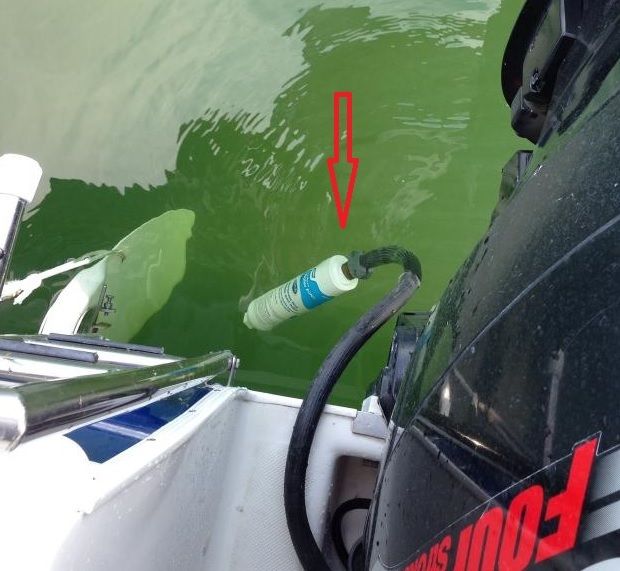
I think your sausage idea has promise. The hardest part is keeping the thing in place.



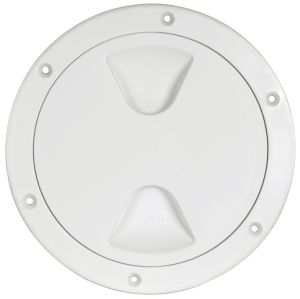
 , these r for deck & access plates , they r not design for taking internal pressure against them the bigger they r the more pressure will be on them & more likely to fail u really have to think these mods out especially when it includes something involving a safety factor just saying that's all

