Night vision in humans actually takes hours to acquire, and is the result of biochemical changes that occur in the retina.
The adjustment that the eye makes for changes in light intensity by opening and closing of the iris takes just seconds.
Since it takes hours to acquire (and just seconds of bright white light to destroy) people who need night vision for critical purposes (deep-sky telescope work, flying, marine navigation, photo darkroom work) will start the process early using dark glasses

, precisely as Bob’s described for us.
If you are navigating by dead reckoning and map reading at night, you will want to look outside the cockpit and be able to see in the darkness, and still look back and read your map, and you will be better able to do that under red light. And you want to see that big tanker bearing down on you fast, or the deadhead floating at the surface.

Using a red light to see during this time allows you to illuminate things enough that you can see them, but not enough that it destroys the accumulating night vision when you look away.
The concentration of cones (colour vision) in the retina is highest in the centre of the field of vision, and the concentration of rods (black and white) is higher outside this area. Which is why when you want to see something more clearly under dim light conditions you need to look just to the side of it, and not directly at it.
You can’t see past the campfire because your pupil has constricted because the light is bright, and you cannot force it to dilate as long as the light in front of you is bright. Look away from the campfire into the darkness (and/or close your eyes) and your pupils will dilate after a few seconds, and then you will be able to see better in the dark.
Unless you have looked directly into the fire. Then it’s your retina that takes time to adjust, maybe a minute to see reasonably well, or hours for best night vision, as I mentioned above.
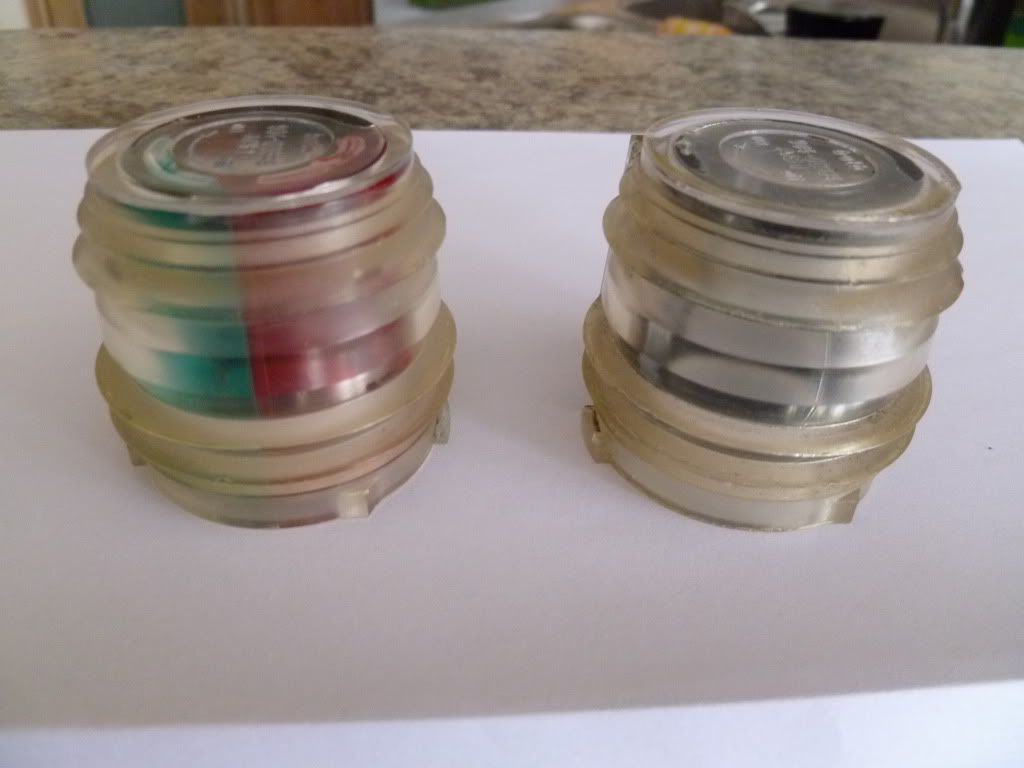
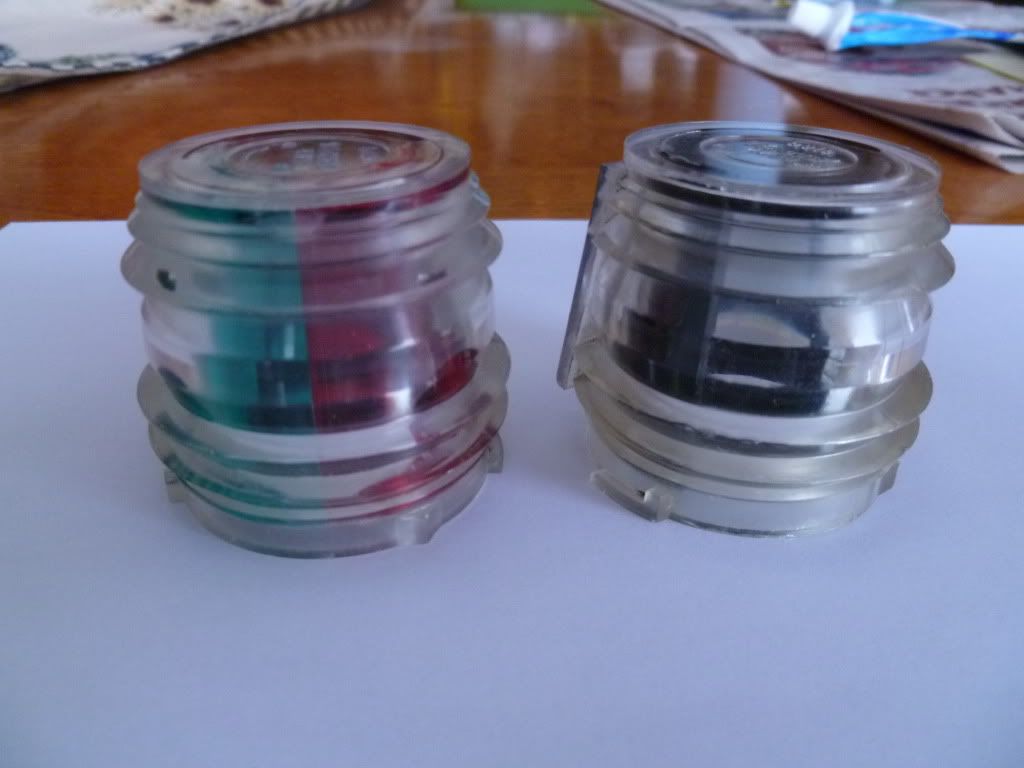
Putting a red (or green) filter in front of a white light source (conventional, incandescent

) will filter out all colours of light and allow just the red (or green) to pass through. But it does dim it when it prevents all the other colours from passing. Turns them to heat = inefficient.

Coloured LEDs do not produce white light – they produce their colour, and ONLY their colour, so no filtration is required. Look closely at red LED and you will notice that it is actually white when it’s not on. That’s one reason (there are others) that you do not want to dim an LED by placing coloured filters in front of it.
Regards- Brian.

Ps. OK, for the didactics; the red light for photographers IS also because photo paper, and some graphic arts films, are not as sensitive to the long wavelengths (red) of light, so it allows you to work with them and still see what you’re doing in a darkroom.