

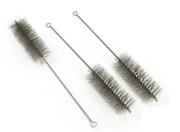
I'm not sold on these things. The idea is that they dissipate the "ground" charge, making a strike less likely. The problem is, that they need to be connected to a deep, conductive keel (preferably in salt water) with conductive plates on the outside of the anti-foul. Not something easy to do in a Mac. My sense is that just slapping one of these on the top of the mast will actually increase your chance of a strike, and their effectiveness in freshwater is still suspect in my mind. I'm not an expert by any means, but I understand research and I once felt 110 volts. That's enough for me.
Lighting protection
-
Starscream

- Admiral
- Posts: 1561
- Joined: Tue Nov 03, 2009 10:08 am
- Sailboat: MacGregor 26X
- Location: Montreal, Quebec. 2002 26X - Suzi DF90A
Re: Lighting protection
-
Neo

- Admiral
- Posts: 1093
- Joined: Fri Jan 30, 2015 4:29 pm
- Sailboat: MacGregor 26M
- Location: Central Coast, NSW, Australia
Re: Lighting protection
I'm with you Jimmy....Flux Capacitor has got to be the way to go! .... That way you can just jump forward to a time in the future when the storms ened
 .... But how will we get our Mac's upto 88mph

You can buy them here ... https://www.oreillyauto.com/flux-capacitor ... Statically this has just as much chance of working than anything else that's been discussed here
All the best.
 Neo
Neo
"Whatever floats ya boat"
Neo"Whatever floats ya boat"
-
Starscream
- Admiral
- Posts: 1561
- Joined: Tue Nov 03, 2009 10:08 am
- Sailboat: MacGregor 26X
- Location: Montreal, Quebec. 2002 26X - Suzi DF90A
Re: Lighting protection
Lol. Every convo on this forum will eventually come back to Turbo Encabulators given enough time.
-
Inquisitor

- Captain
- Posts: 926
- Joined: Mon Apr 23, 2007 5:24 pm
- Sailboat: MacGregor 26M
- Location: North Carolina Mountains
Re: Lighting protection
You know?!... if they actually made it... they'd make a mint. Heck! I'd buy one.Neo wrote: ↑Sat Jan 23, 2021 2:33 pmI'm with you Jimmy....Flux Capacitor has got to be the way to go! .... That way you can just jump forward to a time in the future when the storms ened
You can buy them here ... https://www.oreillyauto.com/flux-capacitor ... Statically this has just as much chance of working than anything else that's been discussed here
Odysseus, expert on the Siren's call
-
OverEasy
- Admiral
- Posts: 2898
- Joined: Mon Sep 28, 2020 11:16 am
- Sailboat: MacGregor 26X
- Location: NH & SC
Re: Lighting protection
A One Iron.
In 1987 Lee Trivino used to hold up a ONE Iron up over his head when they closed the Silverado PGA Course he was playing at due thunderstorms as he walked the reluctant crowd to the safety of the club house while quipping “ Come on folks, Even God has trouble hitting a ONE Iron”....
That’s from a guy who has been hit by lightning three times!
We Agree! Too many variables to know if/when/how with something as powerful as lightning.
The only thing that makes sense is to keep an eye on the weather wherever you are
....(and we personally hope we are never having any kind of first person encounter with it ).
).
In 1987 Lee Trivino used to hold up a ONE Iron up over his head when they closed the Silverado PGA Course he was playing at due thunderstorms as he walked the reluctant crowd to the safety of the club house while quipping “ Come on folks, Even God has trouble hitting a ONE Iron”....
That’s from a guy who has been hit by lightning three times! We Agree! Too many variables to know if/when/how with something as powerful as lightning.
The only thing that makes sense is to keep an eye on the weather wherever you are
....(and we personally hope we are never having any kind of first person encounter with it
 ).
). -
Hamin' X

- Site Admin
- Posts: 3464
- Joined: Sat Aug 27, 2005 6:02 pm
- Sailboat: MacGregor 26X
- Location: Hermiston, OR-----------2001 26X DF-50 Suz---------------(Now Sold)
- Contact:
Re: Lighting protection
I have been on the side of using dissipators for almost 40 years. Over the last 15 or so years, I have posted my opinions here and on other technical forums and have tried to back my opinions with research material and facts. Another member "walt" has taken me to task numerous times with an opposite opinion. You can do an advanced search for these posts by clicking on the gear icon next to the search box at the upper right of the form. Just enter "lightning" for the key word and my user name of "Hamin' X", or Walt's of "walt". or you can click here:
search.php?keywords=lightning&terms=all ... mit=Search
I hesitate to get involved in this discussion, because it usually becomes a mud wrestling match. read for yourself and you can make your own decisions. Have fun and I hope you have lots of time.
search.php?keywords=lightning&terms=all ... mit=Search
I hesitate to get involved in this discussion, because it usually becomes a mud wrestling match. read for yourself and you can make your own decisions. Have fun and I hope you have lots of time.
~Rich---Hamin' X---N7ZH~
-
Starscream
- Admiral
- Posts: 1561
- Joined: Tue Nov 03, 2009 10:08 am
- Sailboat: MacGregor 26X
- Location: Montreal, Quebec. 2002 26X - Suzi DF90A
Re: Lighting protection
Hahaha I remember those days of Walt and Rich...it was our own pre-version of a FB battle. Kudos to Rich for bringing it up because it wasn't a pretty sight, at the time. Now, we are used to it tho.
Those threads show just how much expert opinions can differ, and were key in my decision to do nothing.
I believe that a lightning protection system is possible for a boat, but Macs are the wrong platform to build one on. A solution must be done properly or it could make things worse. Dropping battery cables over the side, or stringing cables up the rigging, are a pale reflection of an actual solution. Creating a complete solution, with dissipators, heavy gauge wiring creating a Faraday cage around the cabin, high radius curves, leading to a huge metal keel or massive dissipation plates are just not feasible on a Mac. Anything less than a complete solution may be inviting disaster.
I'll play the stats. 15,000 + Macs floating around for decades and I have heard of exactly one strike (well, two, if we count a member's house). Either Macs never get caught out or they aren't exactly lightning magnets to begin with.
Those threads show just how much expert opinions can differ, and were key in my decision to do nothing.
I believe that a lightning protection system is possible for a boat, but Macs are the wrong platform to build one on. A solution must be done properly or it could make things worse. Dropping battery cables over the side, or stringing cables up the rigging, are a pale reflection of an actual solution. Creating a complete solution, with dissipators, heavy gauge wiring creating a Faraday cage around the cabin, high radius curves, leading to a huge metal keel or massive dissipation plates are just not feasible on a Mac. Anything less than a complete solution may be inviting disaster.
I'll play the stats. 15,000 + Macs floating around for decades and I have heard of exactly one strike (well, two, if we count a member's house). Either Macs never get caught out or they aren't exactly lightning magnets to begin with.
-
OverEasy
- Admiral
- Posts: 2898
- Joined: Mon Sep 28, 2020 11:16 am
- Sailboat: MacGregor 26X
- Location: NH & SC
Re: Lighting protection
Hi All!
Yes LIGHTNING is a serious topic and yes there are no easy or definitive solutions that apply to every circumstance.
Lee Trivino was as much a comedian as he was a Pro Golfer and he had A LOT OF RESPECT for lightning.
He was also a kind and courteous public figure who I believe was consistently willing to take personal risk (holding a One Iron over his head) to encourage people to get off the course for impending thunderstorms.
From this discussion I went and seriously looked over our Mac26X and both sides are right.
In a former life I have designed high voltage/high amperage systems for EMI (electro magnetic interference) requirements. It’s no easy task even when you already have a hard wired ground point to deal with. Water is anything but that as it has a variable dielectric capacity dependent upon what is dissolved in to and the concentration of those compounds, this includes both fresh and sea water.
From looking at and crawling around our Mac26X I would suggest that on the side of caution that the most direct static conductive path is from the mast through the interior mast support pole then bridging to the swing keel pivot bracket. Now that said, lightning is also known to not only follow a direct current path but is also known to follow a surface coronal discharge path which could include everything on the outside surface of the vessel.
Best thing we personally have as a motto is “When it roars, head indoors” and it is our personal intent that in as much as can be done we intend to follow that and not be out on the boat. IF WE CAN’T we intend to be in the cabin and away from the mast support pole and hope for the best.
Both sides of this topic have valid points and have done right to discuss them.
Thank you!
Yes LIGHTNING is a serious topic and yes there are no easy or definitive solutions that apply to every circumstance.
Lee Trivino was as much a comedian as he was a Pro Golfer and he had A LOT OF RESPECT for lightning.
He was also a kind and courteous public figure who I believe was consistently willing to take personal risk (holding a One Iron over his head) to encourage people to get off the course for impending thunderstorms.
From this discussion I went and seriously looked over our Mac26X and both sides are right.
In a former life I have designed high voltage/high amperage systems for EMI (electro magnetic interference) requirements. It’s no easy task even when you already have a hard wired ground point to deal with. Water is anything but that as it has a variable dielectric capacity dependent upon what is dissolved in to and the concentration of those compounds, this includes both fresh and sea water.
From looking at and crawling around our Mac26X I would suggest that on the side of caution that the most direct static conductive path is from the mast through the interior mast support pole then bridging to the swing keel pivot bracket. Now that said, lightning is also known to not only follow a direct current path but is also known to follow a surface coronal discharge path which could include everything on the outside surface of the vessel.
Best thing we personally have as a motto is “When it roars, head indoors” and it is our personal intent that in as much as can be done we intend to follow that and not be out on the boat. IF WE CAN’T we intend to be in the cabin and away from the mast support pole and hope for the best.
Both sides of this topic have valid points and have done right to discuss them.
Thank you!