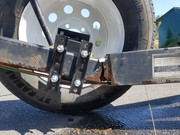
Hi Sheppie62!
For what it’s worth….
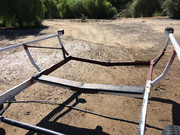
When I’ve had to weld square tubes to flat surfaces that have any chance of getting wet I drill a drain hole in the flat surfaces top and bottom. The two holes allows the cavity to “air out” after draining.
(Seldom can one have an airtight weld the actually holds up over time..

.. it’s generally just not worth it anyway…)
What I’ve found works best over time isn’t trying to apply paint to the interior unless I can flood fill it with an oil enamel paint (after throughly degreasing) but to apply a “residual surface oil” like is used for motorcycle chains (something like PJ1 or something similar). A couple shots generally is sufficient. I generally do that after painting the exterior surfaces.
I’ve found that that it’s hard to get a good well bonded painted surface inside tubing that holds up over time …. Generally I’ve found the penetrating residual oil surface does better at preventing rust, especially if it is part of the structure’s periodic maintenance.
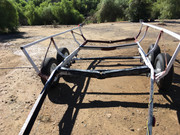
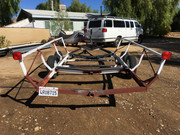
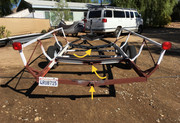
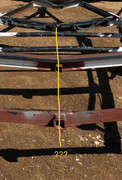
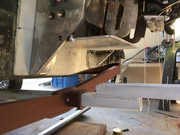
Looking at your photos it looks like you can get to the bottom surfaces of where square tubes are welded so you might be able to drill upwards to penetrate into the void space if desired.
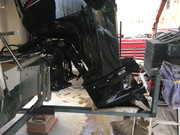
I like the motor support. It’s better than just relying upon the flip down (or up) that the motor comes with. It relieves the hydraulic tilt pistons from the road transit compression loads.
Unfortunately our trailer doesn’t allow us to make a functional support like you have made.
We use the flip support but I’m in the process of figuring out how to add a secondary support (wedges?) to backstop the flipper

though still not as nice as your support!

Best Regards
Over Easy


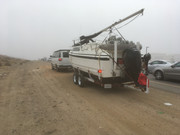
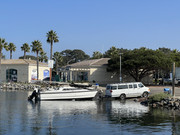
 !
!
 )
)

 .. it’s generally just not worth it anyway…)