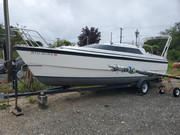
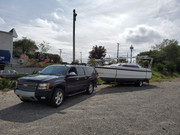
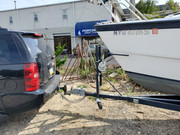
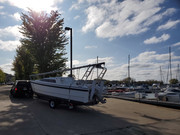
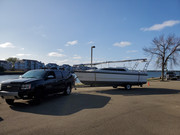
A trailer that has been sitting outdoors for any extended period without being used will probably have bearing problems. They may not be noticeable just by jacking up a wheel and listening to it spin. Plan on replacing the bearings as soon as possible. If you are traveling any significant distance you may want to consider replacing them before you get on the road.
Check the tires for any cracking or signs of dry-rot in the sidewalls, particularly if the trailer has been stored outdoors. Bias ply tires (common on boat trailers) will develop a flat spot if they are left in one position with weight on them. It usually smooths out after the tires warm up, but it may cause an unusual vibration until then. If the trailer has radial tires look for any signs of tread separation. Run your hands carefully around the back edge just below the tread. If you feel any wires poking out replace the tire.
It sounds like you are planning on interstate highway speeds for a portion of your trip. Personally, I'd be uncomfortable with doing that with an unknown (untested) trailer. Keep your speed down and make sure that the boat is all the way forward on the trailer. If it is too far back, even an inch or two, it will probably fishtail at highway speeds. Go slow. Take your time. Stop often and look for any developing problems before they become big ones.
New hubs with bearings installed and prepacked are not expensive and would eliminate most bearing related problems. Consider taking a set and replacing them before you tow it home. New wheels with new tires already mounted are also relatively inexpensive. Don't forget the tools you will need to replace the hubs and/or tires if you take them.
Check the tire pressure. Inflate to the maximum on the sidewall. Trailer tires are often 50psi or more for bias ply tires (radial will be less). Underinflated tires get hot. Underinflated radial tires get hot and throw their tread.
Unless the trailer was recently rewired, take a new set of lights and a wiring harness. On second thought, they are cheap and you will need them eventually anyway. Bring a new set with you.
You might also consider purchasing towing insurance that covers your boat and trailer before you go. Verify that it will tow your boat and trailer as far as you need it to.
Other things to bring:
- a jack big enough to lift the trailer with the boat on it
jack stands
a board to put under the jack/jack stands in case the bad wheel is not on pavement
grease gun and grease
lug wrench with a long handle
penetrating oil (for stuck lug nuts)
electrical tester
spare light bulbs
fire extinguisher
electrical tape
zip ties
hand cleaner
shop rags or paper towels
tire pressure gauge
air pump that can go to well over 50psi
tire sealant and/or spare tire already mounted on wheel (check pressure)
Check for any dull sounds in the trailer tongue and axle by hitting them firmly with a largish hammer. They both will rust from the inside out and will often not show any signs of weakness until they fail. Don't forget to check the springs, hangers, and u-bolts.
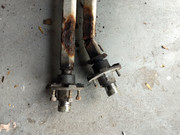
Fortunately my trailer has two axles so this did not strand me, but it did cut my trip short.
I hope you have a safe and uneventful trip and that you enjoy your new boat for many years to come.