Microwave Oven
Posted: Sat Jan 09, 2021 12:19 pm
In a similar vane to my Refrigerator thread viewtopic.php?f=8&t=28046 I want to go over a review of a Microwave oven. I'm not trying to convince anyone to change, just to give information so others can make their own "informed" decisions... or at least to kick-start their research. I've gathered much of this from other "off-grid" forums.
Basis
As part of my general upgrading of the M to gain some luxuries, I'm doing a serious upgrade of electrical capacity. viewtopic.php?f=8&t=28020 In it I started out just looking for 100 Ah of capacity, but quickly found the cost of the next "tier" up of 270-280 Ah was not that much more expensive. Also note: because of the robust nature of Lithium chemistry batteries, this is the equivalent to 450 Ah of any lead-acid based chemistry and still have approximately 3000-4000 cycles that lead-acid will never meet.
With this much power, refrigeration, marine electronics, lighting is almost a trickle of usage. It got me thinking about my cooking needs. I was torn about a stove top. The alcohol burners sounded like the safe way to go, but at $350 for a used Origo really hurt my sensibilities... especially since I've made several of the tin-can alcohol burners for backpacking that worked wonders for the price of a couple of empty beer cans. Turning to propane, I have a camp oven I have for car camping that I was considering.
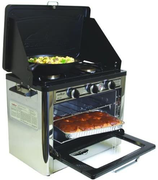
All the extra hardware to do a "reasonably" safe installation (remote tank, remote solenoid valve, ABYC level of installation, propane sniffer) was troubling me on the complexity and safety.
How much would I use the stove tops? How often would I bake a loaf of bread, pizza? Probably not that often in the summer south. We both like to cook elaborate meals at home, but really... we've never go that ambitious on the boat. Anything that ambitious would likely involve a grill on the back of the boat anyway. In this case, a microwave makes a lot of sense. I can boil water for French-press coffee, heat up a bowl of soup, chowder, cook a frozen dinner, popcorn, re-heat leftovers, casseroles far easier and with a whole lot less mess and heat in the cabin.
Research
If you are ever interested in using a microwave off-grid, you must only look at "Inverter" microwaves. If you take nothing else from this thread, this is the most important! I'm no expert... I just learned this on other forums. There are two broad types... Regular and Inverter. Both microwave types have an advertised power and a power usage value. They are not 100% efficient. The advertised wattage is the "cooking" watts of the magnetron. The usage value is how many watts it draws out of your house without tripping the circuit breaker. Typically this is 150% to 200% of the cooking wattage.
Regular Microwave
Regular microwaves use a large transformer that has a huge startup spike to "fill" that transformer before it passes any really high voltage to the magnetron. I've read estimates of 4 to 5 times the rated power. These use pulsing to heat anything below 100% power. For instance, if you've ever defrosted with your home microwave, you'll hear it run a little, go relatively quiet for a little then run hard again. Each time it kicks on, it gets that huge surge of power. So even the cheap $50, 700W Walmart specials, will typically surge to 3500 watts and surely trip your power Inverters.
Inverter Microwave
Inverter microwaves (not to be confused with your power Inverter) doesn't use this large transformer and doesn't pulse. If you set a 50% power setting, it uses 50% of the power, but does it continuously. It uses electronics similar to your power inverter to transform the 120 VAC to the thousands of volts needed by the magnetron. It also does it with a whole lot less "surge". According to a couple of off-grid people in vans, they have successfully run a 1200 watt Inverter Microwave off a 1000 watt power Inverter simply by using a lower power setting on the microwave.
Review
Once I found that I need this "Inverter" microwave, I started looking for specific models. They are rare and thus more expensive. Still concerned about the maximum wattage my chosen Inverter could handle, I started looking for the lowest wattage ones with good reviews. I finally settled on a 950 watt Panasonic https://www.amazon.com/Panasonic-Microw ... B00785MVRA
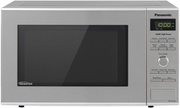
Purely by happenstance, I discovered my Father has one of these for me to test.

Testing
Unfortunately, I do not own an oscilloscope so I am unable to measure the start-up current. I will only be able to see if my chosen inverter can handle it after I finish the Inqism-03 project. I was also hoping I could validate the use statement above about running on a smaller rated power Inverter. Unfortunately, the Inverter I have viewtopic.php?f=8&t=28020&p=347109&hili ... er#p347109 only supplies up to 300 watts and the microwave used right at 300 watts on the lowest setting. I am using a Wemo Insight smart plug that can measure wattage and also measure watt-hours for a test run. Obviously, this is the AC wattage used. The numbers reported below include the AC wattage from the Wemo and projected amps used from the battery assuming a 90% efficiency rating on the power Inverter.
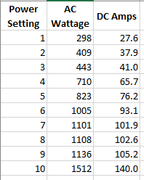
As a real-world gauge, I heated up a frozen dinner. The box's instructions said on high for 6 minutes 30 seconds.
This required 140 AC watt-hours and 13 amp-hours from the battery (calculated).
Although a lot of energy, multiple hits of this usage is well within the capacity of a 270 Ah battery... as long as there is some way to replenish it, if on a long trip.
Basis
As part of my general upgrading of the M to gain some luxuries, I'm doing a serious upgrade of electrical capacity. viewtopic.php?f=8&t=28020 In it I started out just looking for 100 Ah of capacity, but quickly found the cost of the next "tier" up of 270-280 Ah was not that much more expensive. Also note: because of the robust nature of Lithium chemistry batteries, this is the equivalent to 450 Ah of any lead-acid based chemistry and still have approximately 3000-4000 cycles that lead-acid will never meet.
With this much power, refrigeration, marine electronics, lighting is almost a trickle of usage. It got me thinking about my cooking needs. I was torn about a stove top. The alcohol burners sounded like the safe way to go, but at $350 for a used Origo really hurt my sensibilities... especially since I've made several of the tin-can alcohol burners for backpacking that worked wonders for the price of a couple of empty beer cans. Turning to propane, I have a camp oven I have for car camping that I was considering.
All the extra hardware to do a "reasonably" safe installation (remote tank, remote solenoid valve, ABYC level of installation, propane sniffer) was troubling me on the complexity and safety.
How much would I use the stove tops? How often would I bake a loaf of bread, pizza? Probably not that often in the summer south. We both like to cook elaborate meals at home, but really... we've never go that ambitious on the boat. Anything that ambitious would likely involve a grill on the back of the boat anyway. In this case, a microwave makes a lot of sense. I can boil water for French-press coffee, heat up a bowl of soup, chowder, cook a frozen dinner, popcorn, re-heat leftovers, casseroles far easier and with a whole lot less mess and heat in the cabin.
Research
If you are ever interested in using a microwave off-grid, you must only look at "Inverter" microwaves. If you take nothing else from this thread, this is the most important! I'm no expert... I just learned this on other forums. There are two broad types... Regular and Inverter. Both microwave types have an advertised power and a power usage value. They are not 100% efficient. The advertised wattage is the "cooking" watts of the magnetron. The usage value is how many watts it draws out of your house without tripping the circuit breaker. Typically this is 150% to 200% of the cooking wattage.
Regular Microwave
Regular microwaves use a large transformer that has a huge startup spike to "fill" that transformer before it passes any really high voltage to the magnetron. I've read estimates of 4 to 5 times the rated power. These use pulsing to heat anything below 100% power. For instance, if you've ever defrosted with your home microwave, you'll hear it run a little, go relatively quiet for a little then run hard again. Each time it kicks on, it gets that huge surge of power. So even the cheap $50, 700W Walmart specials, will typically surge to 3500 watts and surely trip your power Inverters.
Inverter Microwave
Inverter microwaves (not to be confused with your power Inverter) doesn't use this large transformer and doesn't pulse. If you set a 50% power setting, it uses 50% of the power, but does it continuously. It uses electronics similar to your power inverter to transform the 120 VAC to the thousands of volts needed by the magnetron. It also does it with a whole lot less "surge". According to a couple of off-grid people in vans, they have successfully run a 1200 watt Inverter Microwave off a 1000 watt power Inverter simply by using a lower power setting on the microwave.
Review
Once I found that I need this "Inverter" microwave, I started looking for specific models. They are rare and thus more expensive. Still concerned about the maximum wattage my chosen Inverter could handle, I started looking for the lowest wattage ones with good reviews. I finally settled on a 950 watt Panasonic https://www.amazon.com/Panasonic-Microw ... B00785MVRA
Purely by happenstance, I discovered my Father has one of these for me to test.
Testing
Unfortunately, I do not own an oscilloscope so I am unable to measure the start-up current. I will only be able to see if my chosen inverter can handle it after I finish the Inqism-03 project. I was also hoping I could validate the use statement above about running on a smaller rated power Inverter. Unfortunately, the Inverter I have viewtopic.php?f=8&t=28020&p=347109&hili ... er#p347109 only supplies up to 300 watts and the microwave used right at 300 watts on the lowest setting. I am using a Wemo Insight smart plug that can measure wattage and also measure watt-hours for a test run. Obviously, this is the AC wattage used. The numbers reported below include the AC wattage from the Wemo and projected amps used from the battery assuming a 90% efficiency rating on the power Inverter.
As a real-world gauge, I heated up a frozen dinner. The box's instructions said on high for 6 minutes 30 seconds.
This required 140 AC watt-hours and 13 amp-hours from the battery (calculated).
Although a lot of energy, multiple hits of this usage is well within the capacity of a 270 Ah battery... as long as there is some way to replenish it, if on a long trip.


 ). Carpentry work is just not something they really can or want to do. A smaller subset of the forum are quite happy doing a project. You are obviously one. Then there is a Fringe subset (we ain't quite right
  location. According to most of my reading, if it stays sealed, you can turn off its power over night so you don't have it running next to you in the aft berth. One step further, you could make a nice wood cabinet for sound deadening and/or added insulation. The major problems with this solution are how much of the berth it uses and how inconvenient it is to access. I'm afraid I don't have a middle ground suggestion.


