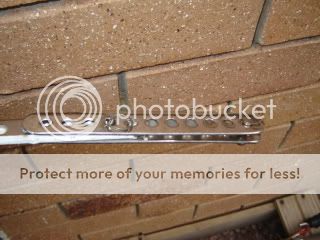
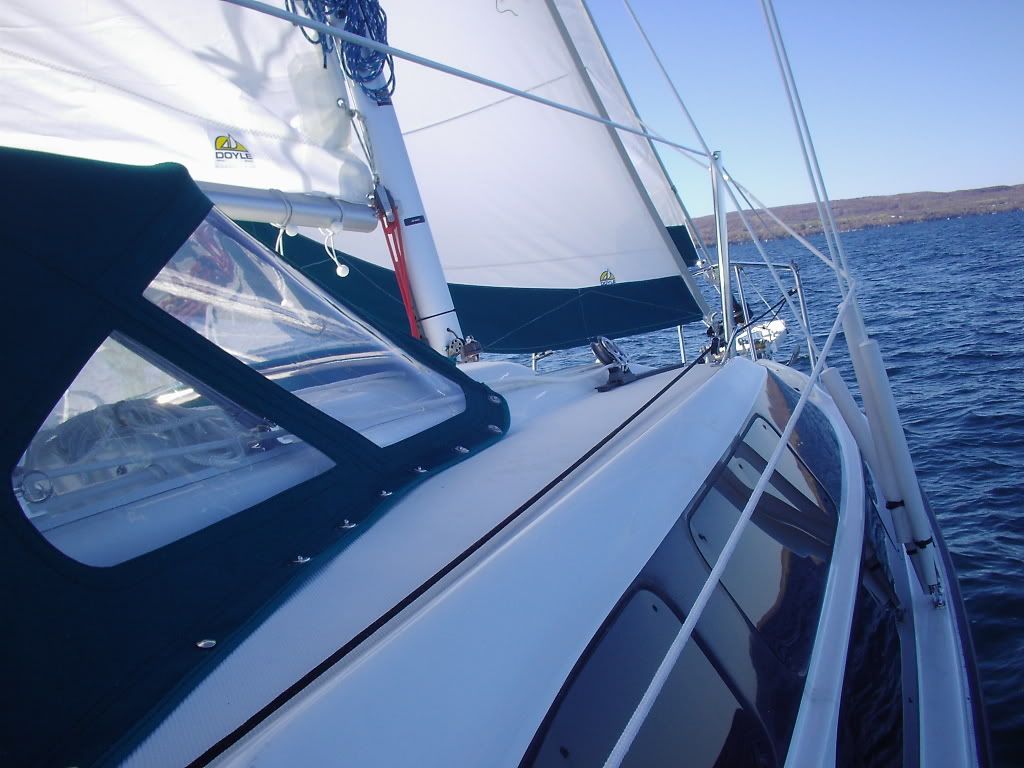
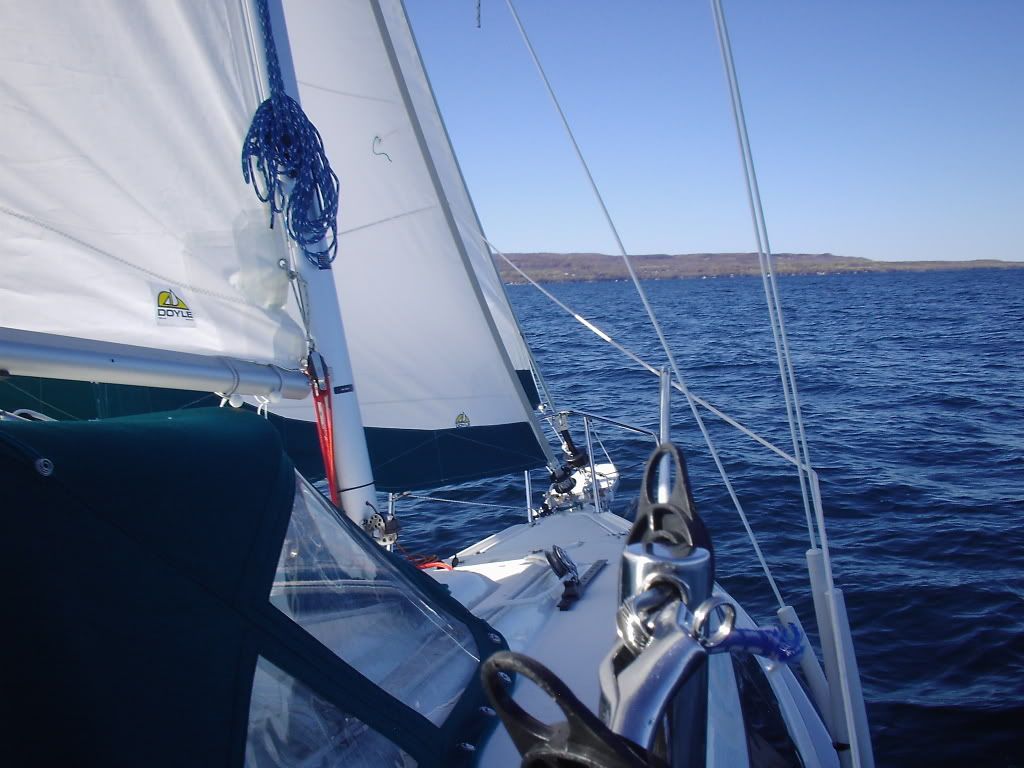
basically you are taping the rings so that they cant work off the clevis pins that keep the standing rigging (shrouds) in place. Imagine wrapping tape around a split pin so that it cant 'split' and find its way off.
Also, why should we have to take care of the problem in the first place (
It goes under the moniker 'seamanship' Roger doesnt tell us not to shoot around coral reefs at full throttle, he expects prudent operation at all times
This includes periodic inspection of all rigging, hardware etc....
Sloop John B wrote:
Don't use ring dings that you're used to. Use 'key chain' dings. You know, the kind you have to split open with a pen knife to get another key onto.
So what's the verdict here......? Original ring dings, key chain ring dings or clevis pins?
Glad everyone abord is safe and thanks for making us all think about our rigging.
Sorry for dredging up such an old post but I am wondering if anyone has found a better type of pin to connect the furler to the deck plate than the stainless steel clevis pin and itsy-bitsy ring ding which came with the boats? I am looking for something that is faster to pin the furler into place when rigging yet not compromise any safety!!! That little ring ding is ridiculously small for my big mits.
One of the first things I did when taking over the boat was to remove all the ring dings & change over to bottle screws, its a lot easier when rigging de-rigging as well.
Hello,
I wouldn't use cotter pins. The forces that can load axially will bend and pull them through. Cotter pins are very soft compared to the ringdings which are heat treated tough.
I'm with Duane, put them in the protected (therefore difficult) position. I check my ring dings every time out. Since I trailer the boat, I get to eyeball them before heading off down the road.
I am wondering does the boats in question have the 135 jib that rubbs the shrouds each tack ? Our 110 jib does not rub the shrouds and we have no pin problems. I can understand how hard the 135 jib rubs across the spreaders when tacked by the sheets by hand, I went out on HaminX's Mac X a few weeks ago in really light air and this hard rubbing without the wind moving the 135 jib across the deck was really difficult to drag across the deck on a tack using the sheets and not let the wind tack the 135 jib. This kind of rough forced tacking has got to cause problems and wear with everything it rubbs against, shrouds, pins, keeper rings, ect.
Patience and let the wind tack the 135 jib or just let the main work by its self to save the wear and a tuisted mast.
Doug W wrote:
Sorry for dredging up such an old post but I am wondering if anyone has found a better type of pin to connect the furler to the deck plate than the stainless steel clevis pin and itsy-bitsy ring ding which came with the boats? I am looking for something that is faster to pin the furler into place when rigging yet not compromise any safety!!! That little ring ding is ridiculously small for my big mits.
Thanks!
Doug
Galactica
When I installed my snapfurler I also got a new 5/32 forestay and 5/16 turnbuckle that came with a bigger/thicker clevis pin. I also bought a spare clevis pin that was 1/2 inch longer and a bigger heavier ringding. You might be able to just replace your current cleavis pin and ringding with a larger longer one. I would avoid the use of another snapshacle or d-ring and just get a longer, stouter cleavis pin, the next size up should be a very snug fit, it was with mine.
Install these covers they stop the sheets from falling over the shroud adjusters & if they do go down onto the deck the sheets slide on the covers and cannot catch the ring dings & pull them out which can happen ! or just tape the ring dings up, but the covers also keep the ajusters from chipping the deck while trling . Dont get confused by the fact that I have three covers is because my cutter rig has an extra 3rd set of shroulds going to the masthead
Also important to check clevis pins and ring dings on life lines. I was sailing alone with the steering locked down when I had to go up on the fore deck to clear a jammed line. I had one hand firmly grasping the life line when it came loose from the bow pulpit. The only thing that kept me from going overboard was the mast stay. I plan to replace the clevis pin/ring dings with bolts and nylon lock nuts. I have the covers on the mast stays and plan to put some on the life line where it connects to the bow pulpit as I noticed the head sail rubs there as well.
SS