Anchors Aweigh, Navy Sailor—
Yes, you can build what you see there, and the best part of it all is that you really do not need prime grade lumber.
I am familiar with the Butler website; he has a lot of good projects. Let me encourage you.
Here are a couple of photos of a similar companionway hatch. This hatch was built by Bob Smelser from the Northwest.
You may like his design as well. First, let's take a look at what he started out with.
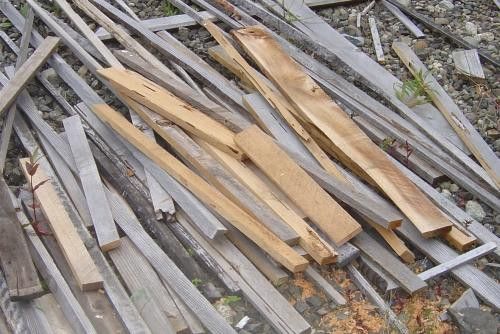
Not sure what type of wood Bob used, but as you can see, everything looks a bit rough around the edges.
By the time he finished, the finished product looked very respectable. As I recall, he used ship-lap joints to keep the water out.
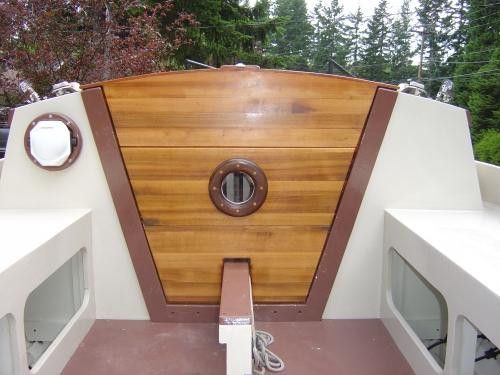
The porthole is probably purple heart.
I did something similar myself, but used mahogany. The boat was a bit larger, and the design more suitable for the era in which the boat came. At any rate, here is a glimpse of a companionway hatch, built for a Friendship Sloop replica.
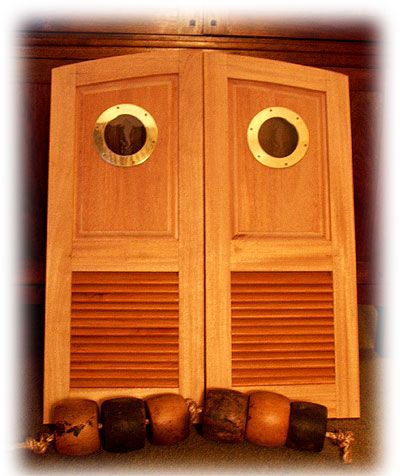
Mahogany is a good wood; it's traditional and looks very nautical. Besides, compared with teak, you will find mahogany much easier to work and much easier on the pocketbook. (Yes, I sandblasted the seahorse on the porthole; I don't know why.) You should be able to find a hardwood lumberyard. That is where you want to go, not Home Depot. Want you want is African mahogany, 4/4 surfaced both sides.
Once you have finished your project, sand it smooth, and use a good marine varnish. Here is a word of warning: any exterior brightwork includes the word,
work. You will need to refurbish your project from season to season, but the project will look very good. The Smelser design would be much easier to make, and would allow you to store the planks in a lazarette. Keep your planks relatively narrow, and you will have less problems with warped boards.
Fair winds,
Barnacle Jim


 wink
wink