use of "plug and play" solar for temporary use

A forum for discussing boat or trailer repairs or modifications that you have made or are considering.
User avatar
Herschel
Admiral
Posts: 1487
Joined: Wed Sep 28, 2005 4:22 pm
Sailboat: MacGregor 26X
Location: Orlando, Florida
Contact:

Re: use of "plug and play" solar for temporary use

Post by Herschel »

For Deckhand: You said:
"I've been using this for about a year to monitor my battery bank. It seems to be pretty accurate on the voltage and amperage measurements. Counting amp hours in and out is a subject all to itself, but if you program it to the rated (or measured) 20 hour value for your bank and you don't go over that rate, it will give you a value that is somewhere between "accurate" and "pessimistic" for the percentage of your bank's capacity that you have used."
Why 20 hour? Also, SOC meaning? One Q&A answer in the product discussion for the recommended meter indicated you had to run your battery bank down to zero in order to calibrate it properly. that sounds a bit risky to do to my AGM Optima's. What say you?

For anyone: I had been thinking that the portable power station with portable solar would be a way to break into solar technology without the proverbial MS in engineering, but that hope seems to be slipping away. So, say I get my cooler without the power station, but get the portable solar with its own controller like Boat's. If I just attach the terminal leads to the terminals of my battery bank, will it work seamlessly with my current Yamaha alternator and shore power charger? Or do i need to install some kind of gadget to analyze where all the various electrical streams are coming from and control the stream as it goes into the battery bank?

For Tom: I think the Firefly Oasis battery technology is essentially an AGM that has reduced the amount of sulfation so one can draw down the charge to well below the usual 40-50%. The online ads suggest they were developed for truckers who don't want to have to run their diesels when catching a nap at a rest stop. 8)
User avatar
Herschel
Admiral
Posts: 1487
Joined: Wed Sep 28, 2005 4:22 pm
Sailboat: MacGregor 26X
Location: Orlando, Florida
Contact:

Re: use of "plug and play" solar for temporary use

Post by Herschel »

User avatar
Be Free
Admiral
Posts: 1889
Joined: Fri Nov 23, 2012 6:08 pm
Sailboat: MacGregor 26X
Location: Steinhatchee, FL

Re: use of "plug and play" solar for temporary use

Post by Be Free »

"Why 20 hour? Also, SOC meaning? One Q&A answer in the product discussion for the recommended meter indicated you had to run your battery bank down to zero in order to calibrate it properly. that sounds a bit risky to do to my AGM Optima's. What say you?"

The 20 hour discharge rate is the standard rate for measuring amp hour ratings on deep cycle batteries.

SOC is State of Charge. That is what you are trying to estimate with your tester based on the voltage of the battery. A fully charged battery would measure about 12.7v; one discharged to 50% would be about 12.2v. The numbers are approximate and accurate measurement difficult. That is why using voltage as a proxy for state of charge is problematic. The specific gravity of the electrolyte is a more accurate way to determine it but no one likes to pull out their hydrometer every time they want to see how much charge they have left on their battery. The meter I mentioned in my last post was a good compromise for me.

The discussions for the meter used the 100% discharge method to get an accurate(ish) number for the actual amp hour rating of the battery. I would not suggest taking any battery down to zero without the proper equipment and more experience than I have. You can enter any value you want for the amp hour rating of your battery bank when you set up the gauge. I programmed it with the rated amp hour values when the batteries were new and then decreased it 10% each year the bank had been in service. For deep cycle lead acid batteries that are seldom discharged even to 50% I think that is a safe (if somewhat pessimistic) estimate of their remaining life.

The only direct experience I have with a large AGM battery is in my wife's Jaguar. It lasted about 6 years and was very expensive to replace. :)
Bill
2001 26X Simple Interest
Honda BF40D
"If I were in a hurry I would not have bought a sailboat." Me
User avatar
BOAT
Admiral
Posts: 4969
Joined: Fri Oct 19, 2012 5:12 pm
Sailboat: MacGregor 26M
Location: Oceanside, CA MACMJ213 2013 ETEC60

Re: use of "plug and play" solar for temporary use

Post by BOAT »

The cig lighter battery indicator is no good unless you can turn everything off. ANY current drawing away or charging in will pretty much make whatever the number is your reading wrong. Also, knowing the voltage does not tell you if the battery is any good. Even a bad battery will charge to 13 and drop to nothing as soon as a load is applied. The only way to know the condition of a battery is with a shunt on the negative terminal. The shunt will detect all the power going in and out of the entire system and divide the difference with a sample of a known amperage draw over a known period of time to calculate an actual total of watt hours that left in the battery. A weak, damaged battery can read a healthy 13 volts but have very little power in it. Even a tiny battery fully charged will show great voltage numbers and then go totally dead as soon as you put a load on it.

Voltage means nothing.

Another thing - with Lithium there is no need for a "bank" of batteries. One 100AH would probably be plenty for a reefer and even some LED lighting.

The big deal that is the real money is what Tom said - you need the proper charging stuff.
User avatar
1st Sail
Captain
Posts: 680
Joined: Wed Dec 31, 2008 11:58 am
Sailboat: MacGregor 26M
Location: Moline, IL '06M 50hp Etec
Contact:

Re: use of "plug and play" solar for temporary use

Post by 1st Sail »

A few years back Practical Sailor published a multi part series on marine electronics which was a goof primer to read. A couple of things I recall was battery monitoring hardware is most effective with constant use. It been a few years since I read mine cover to cover so possibly there have been improved technical refinements. I do recall the most sophisticated monitors ex. Victron etc. had software algorithms that learned progressively as the systems is used (charged/discharged). In contrast infrequent use produced less accurate results.

My Etec 50 is known for its high output alternator. There is no charge monitoring on the engine so you could definitely overcharge your AGM. I plan to add a charge controller profiled for my AGM's as the charge and float voltages for AGM's is specific to the battery type. Lead acid, AGM and LiPo all have specfic charge current/voltage and float voltage profiles.

Like you I may opt for a portable LiPo box and solar panel. I noticed most 1000-1400 watt portables were sold out on Amazon.
:macm:
User avatar
Herschel
Admiral
Posts: 1487
Joined: Wed Sep 28, 2005 4:22 pm
Sailboat: MacGregor 26X
Location: Orlando, Florida
Contact:

Re: use of "plug and play" solar for temporary use

Post by Herschel »

The cig lighter battery indicator is no good unless you can turn everything off.
Well, Boat, if all my circuit switches are off, the engine is not running. Shore power unplugged. There's no draw on the battery other than small circuit "leakages', the 12.8 volts that shows in my little meter, seems like it is saying something reasonably "good" about my battery bank (switch on "both"). The Yamaha 50 engine fires right up! The engine fires right up when the number is 12.6, too! Seems like I got to be measuring something useful! Number of healthy hamsters running on the wheels inside my Optima's? :P
User avatar
Tomfoolery
Admiral
Posts: 6135
Joined: Tue Jul 05, 2011 7:42 am
Sailboat: MacGregor 26X
Location: Rochester, NY '99X BF50 'Tomfoolery'

Re: use of "plug and play" solar for temporary use

Post by Tomfoolery »

Herschel wrote: Mon Jul 20, 2020 7:48 pmSeems like I got to be measuring something useful! Number of healthy hamsters running on the wheels inside my Optima's? :P
Problem is, from the meter you can't tell if those hamsters are young studs full of pi$$ and ginger that can go all day, or old pharts like me who talk a good game but have to stop to rest just walking to the refrigerator for another beer. :P
Tom
Be seeing you . . .
User avatar
BOAT
Admiral
Posts: 4969
Joined: Fri Oct 19, 2012 5:12 pm
Sailboat: MacGregor 26M
Location: Oceanside, CA MACMJ213 2013 ETEC60

Re: use of "plug and play" solar for temporary use

Post by BOAT »

Tomfoolery wrote: Tue Jul 21, 2020 4:40 am
Herschel wrote: Mon Jul 20, 2020 7:48 pmSeems like I got to be measuring something useful! Number of healthy hamsters running on the wheels inside my Optima's? :P
Problem is, from the meter you can't tell if those hamsters are young studs full of pi$$ and ginger that can go all day, or old pharts like me who talk a good game but have to stop to rest just walking to the refrigerator for another beer. :P
There is a place for voltage meters - I have them too, but I am not really using the voltage to monitor the battery condition, I mostly check the voltage to make sure I am not damaging the equipment that is connected to the batteries. If I am running the auto pilot and it's computers and electronic sensors with that powerful piston arm I want to make sure the system is getting all the voltage it needs so I don't fry my electronics. If I flip the voltage gauge while underway an I see the voltage dipping under the load of the pilot I know I have a problem and I stop the pilot. Lots of people wonder why their chartplotter or radar unit overheated and shorted out never realizing they have an under-voltage issue.

Voltage meters are fine for telling you a battery is charged but useless for testing battery condition. That's not the purpose of a voltage meter.

Most people just encounter a dead battery as a total "surprise", but if they had been using a proper meter with a shunt on the ground they would have seen weeks or even months earlier that their battery was not holding as much charge as it used to hold. They would have seen the steady decline of the batteries ability to hold a charge over time and use and would have replaced the battery long before it became a "surprise" because they were just using a voltage meter. Often the "surprise" comes at the worst time - when the wind dies near the rocks and you need to motor out of danger.
User avatar
Herschel
Admiral
Posts: 1487
Joined: Wed Sep 28, 2005 4:22 pm
Sailboat: MacGregor 26X
Location: Orlando, Florida
Contact:

Re: use of "plug and play" solar for temporary use

Post by Herschel »

so, Boat, are you in agreement with Deckhand that something like this would be the better way to measure the "pi$$ and vinegar" of my hamsters? :D
User avatar
BOAT
Admiral
Posts: 4969
Joined: Fri Oct 19, 2012 5:12 pm
Sailboat: MacGregor 26M
Location: Oceanside, CA MACMJ213 2013 ETEC60

Re: use of "plug and play" solar for temporary use

Post by BOAT »

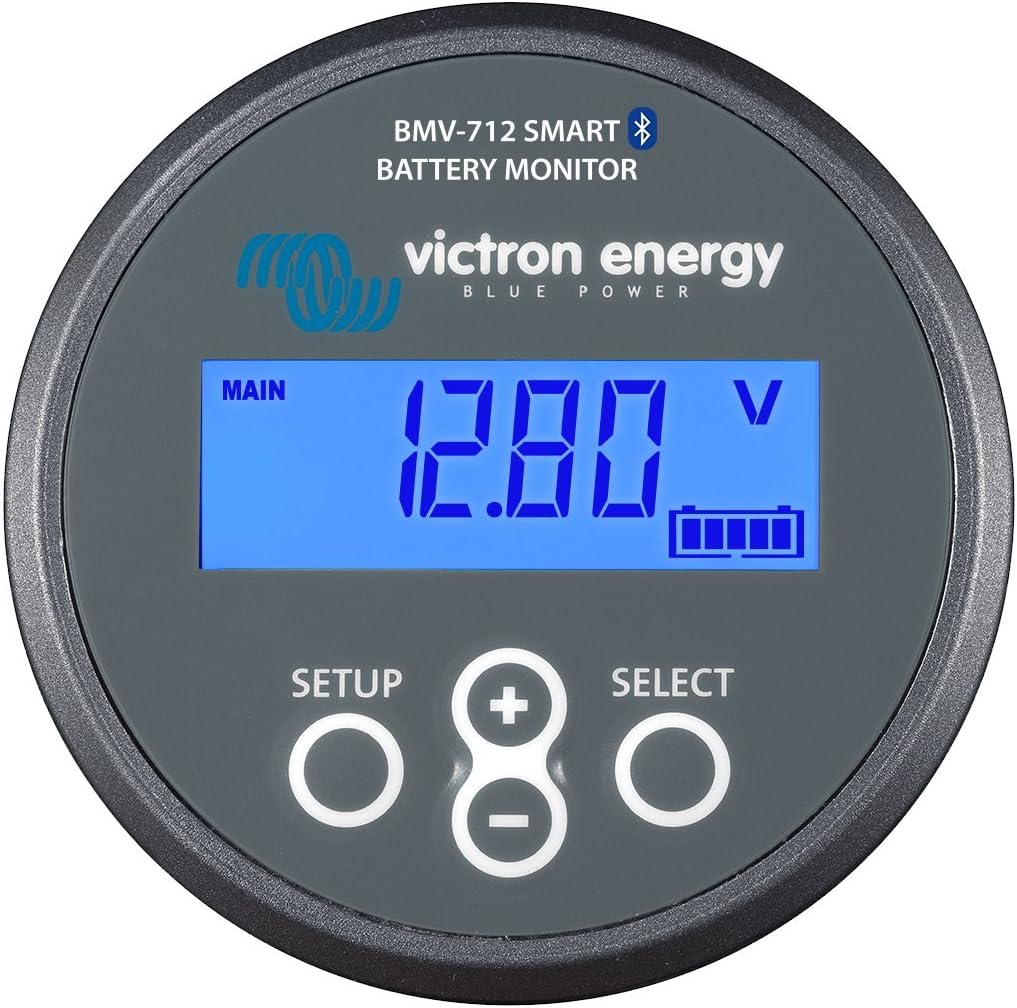
Yes, that's a lot better because it can read actual amp hours. You need a shunt on the ground to determine that.

I am not familiar with that model but I'm sure Tom can rate the specs for us. Here is an example of a good one that I am familiar with:

Image
https://www.amazon.com/Victron-Energy-M ... 8369&psc=1
User avatar
Herschel
Admiral
Posts: 1487
Joined: Wed Sep 28, 2005 4:22 pm
Sailboat: MacGregor 26X
Location: Orlando, Florida
Contact:

Re: use of "plug and play" solar for temporary use

Post by Herschel »

OK, say I get Boat's SOC meter with shunt, rewire my battery bank to install the shunt, and wanted to get the portable solar with its own controller to augment the system. Do you have to get an additional gadget of some type to act as the brains of the system to monitor and control the multiple streams of power generated, or can you just connect the solar panel's leads from its controller to the battery bank directly? If there is, then It is sort of sounding like it might be simpler to keep a power station for the solar and just have two separate systems, so I can switch to the power station, if my battery bank isn't quite up to the load for whatever reason. :?
User avatar
BOAT
Admiral
Posts: 4969
Joined: Fri Oct 19, 2012 5:12 pm
Sailboat: MacGregor 26M
Location: Oceanside, CA MACMJ213 2013 ETEC60

Re: use of "plug and play" solar for temporary use

Post by BOAT »

If you decide to go with the power station you do not need any of the other stuff. The power station has everything already built in.
User avatar
Herschel
Admiral
Posts: 1487
Joined: Wed Sep 28, 2005 4:22 pm
Sailboat: MacGregor 26X
Location: Orlando, Florida
Contact:

Re: use of "plug and play" solar for temporary use

Post by Herschel »

BOAT wrote: Wed Jul 22, 2020 5:50 am If you decide to go with the power station you do not need any of the other stuff. The power station has everything already built in.

Yes, I am flirting with the idea of a power station, but could I just throw on the solar without further hardware? Is it OK to just hook up the solar to the batteries? Background: When I bought and wired my charger, I REALLY didn't know anything about batteries. I have a single battery charger going to my starter battery, so that when hooked up to shore power, the starter battery is getting a three stage charge going to it as needed. The AGM switch is in the correct position. I keep my main battery switch on "both" almost all the time unless for some reason---at anchor for an afternoon, or on a long sail---I'll switch to the house battery. I am under the impression that since I leave the switch on "both" any charge that goes from the charger to the starter battery from shore power gets trickled into the house battery at some point. Both batteries always read 12.8-ish when I check them separately, and they have served me well for over 4 years. I really don't know how the alternator on the Yamaha functions; it just seems to always keep the batteries charged nicely while motoring. I keep the switch on "both" while motoring. I do know NOT to turn that switch while the motor is running! :) One of my objectives in starting this thread was to see if I could find a safe and understandable way to break into the solar world, but I don't know really how to be sure I am doing that given my set up. I know I need to replace the single charger with a dual at some point. And get the meter with the shunt wired into the circuit. Any thoughts appreciated. :?
User avatar
BOAT
Admiral
Posts: 4969
Joined: Fri Oct 19, 2012 5:12 pm
Sailboat: MacGregor 26M
Location: Oceanside, CA MACMJ213 2013 ETEC60

Re: use of "plug and play" solar for temporary use

Post by BOAT »

Yeah, I thought you were considering going solar as a system and if you do that you need a solar panel with the PWM included or you need to add a separate controller. When doing a solar system it's best to do all the stuff together so it's all set up to work together. All you need to do is decide how much power you need and go from there.

If your charging gel batteries you need to have a meter that can tell the state of charge in amp hours - that requires a shunt - otherwise it's a guess.

If you charging lithium batteries the meter is not really important because there is no damage to lithium batteries if you drain them all the way. The reason I steered you to the shunt meter is because you like the gel batteries - those can get damaged easily so a shunt meter is really needed for those - not so much if you go lithium.

The power stations are all lithium based so overcharging and undercharging and draining and all that stuff does not matter and they also have the PWM controller built in too so you can pretty much connect ANYTHING to those lithium generators.
User avatar
Be Free
Admiral
Posts: 1889
Joined: Fri Nov 23, 2012 6:08 pm
Sailboat: MacGregor 26X
Location: Steinhatchee, FL

Re: use of "plug and play" solar for temporary use

Post by Be Free »

Herschel wrote: Tue Jul 21, 2020 2:23 pm so, Boat, are you in agreement with Deckhand that something like this would be the better way to measure the "pi$$ and vinegar" of my hamsters? :D
Hershel,

The monitor I pointed you to is similar to the Victron but not nearly as smart (or as expensive). They both count the amps in and out through a shunt on the negative cable. The Victron software is supposed to take into account the fact that you are drawing more or less than the 20hr rate and adjust the state of charge percentage accordingly. It is the Cadillac of battery monitors; the one I use is more of a Volkswagon.

As batteries age, their amp hour capacity will decrease. Given the same build quality and chemistry, how much it decreases is primarily a function of how the battery was treated. Closely related is how well the battery can store and deliver a charge when it is needed. That is the "pi$$ and vinegar" that Boat is referencing.

In answer to your original question: The wiring and configuration of a solar charging system is neither terribly difficult nor complicated. That said, a self contained system will be easier and less complicated. I totally concur with the recommendation that you find the refrigeration system that fits your needs and measure the actual power requirements in your boat under your conditions. Once you know how much power you will need, look into what you need to do to supply the power. Whether you need to modify your current setup or add a parallel power source really depends on how much power you need and how much money and effort each will require.

One more thing to consider regardless of the choice is where to put the solar panels. I have a small Goal Zero unit that works great but it is always a challenge to set it up on the boat where it will work and not fall over. On an X the cabin top is the easiest place to put solar panels but it is a challenge to wire and takes away your easiest path to the bow. It is often shaded when under sail. A hard dodger is a great place but not many of us have one. The bimini is not always up and works better with flexible panels (more expensive or less efficient in general). A radar arch is a good choice but even fewer of us have one. A purpose built solar panel holder is fairly common but increases windage of our already windage-prone boats (also a problem with hard dodger and radar arch).

I'll probably go with solar and a purpose built frame and an MPPT controller when I get around to that particular project. That's what my calculations say works best for me. YMMV.

BTW, my user name is Be Free. "Deckhand" is something that the board has named me (like you are "Captain" and Boat is "Admiral". I suspect it is based on the number of posts we have each made. You, or anyone else, are welcome to call me ...

Bill
Bill
2001 26X Simple Interest
Honda BF40D
"If I were in a hurry I would not have bought a sailboat." Me
Post Reply