Hi IdiotFool!
Just my 2 cents…..
I agree with the others in that what you “can do” and what you “should do” are two different animals.
You “should” have a close to the batteries fuse or breaker. Guidance is something like within 6 to 12 inches (or less which is where things like the fuses mounted directly to the positive battery terminal posts come into play). That way if any portion of the wiring anywhere resulting in a dead short were to occur the fuse or circuit breaker pops off.
You “should” have separate circuit switches with dedicated fuses or circuit breakers for each ‘point of use’ distribution such as cabin lights that are going to limit the current to the requirements of the ‘use’ AND the wire gauge AND switch capability (generally whichever is lower. That way if something on the individual ‘point of use” goes awry that particular circuit is protected. When that circuit goes down the problem is limited to just that circuit. For example we have our two cabin lights on two separate circuits so that if there was a problem with one of them we aren’t leaving ourselves totally in the dark.
Same goes for our Navigation light circuits, our DC utility outlets, each of the bilge pumps, & etc….
Now back to your original question… ‘Can you use one of the switches on your new panel as a sub main for the rest of the circuits going through your new panel?” The answer is it depends on the rated capability of the particular switch, the system wire used and the limiting current of the associated fuse or breaker. Too much current through the switch will cook the switch. Too much current through the wiring feeding the other circuits will cook the wires. Too large a sub-main fuse or breaker will allow the system to cook off (which could cause a fire or damage) and too low a sub-main fuse or breaker will prematurely drop out everything on all the other circuits all at once (which could be rather annoying).
An adequate understanding of what circuits are involved, the electrical loads involved, the actual gauge/condition/lengths of wire involved, the rated capabilities of the switches involved and the proper fusing or breaker capabilities are all required knowledge before an actual appropriate answer to your question can be given.
Hope this helps some….
Best Regards,
Over Easy


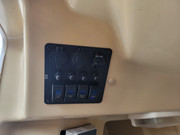
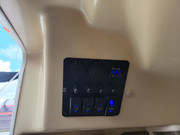


 ). Agree with Russ's comments regarding circuit rating and fusing.

 One of them came back enough to sometimes start the engine. The other would never even take a charge again.

